The Challenge
Most authoring-tool tutorials teach feature by feature: here's how to add a button, here's how to build a quiz, here's a timeline. Learners finish able to click every command but rarely walk away with something they actually built end to end, which makes the skills hard to transfer to a real project.
My Approach
I designed a course that treats Storyline fundamentals as steps toward a single deliverable rather than a list of disconnected demos. Every lesson (interface orientation, slide masters, timelines and triggers, variables, quiz-building, publishing) builds directly toward one capstone project, so the skill and the application are never separated.
The Solution
- Progressive skill-building lessons. Interface orientation, slide layers, adding text and media, timelines and triggers, variables, quiz creation, and publishing, each one a building block for the next.
- A real-world-style capstone: the "Medinova Health" exercise. Learners are handed a creative brief and a full brand and style guide for a fictional healthcare company, then build a branded new-hire onboarding course against it, the way a real client handoff actually works.
- Personalization through variables. The capstone requires capturing a learner's name early in the course and reusing it throughout, turning an abstract Storyline feature into a concrete, motivated use case.
- A finished, working deliverable. Learners leave with a fully branded, published course, not just a certificate of completion.
Exercise Materials
The actual brief and brand guide given to learners for the capstone exercise:

Scenario Instructions
The creative brief: build a new-hire onboarding course for "Medinova Health," step by step.
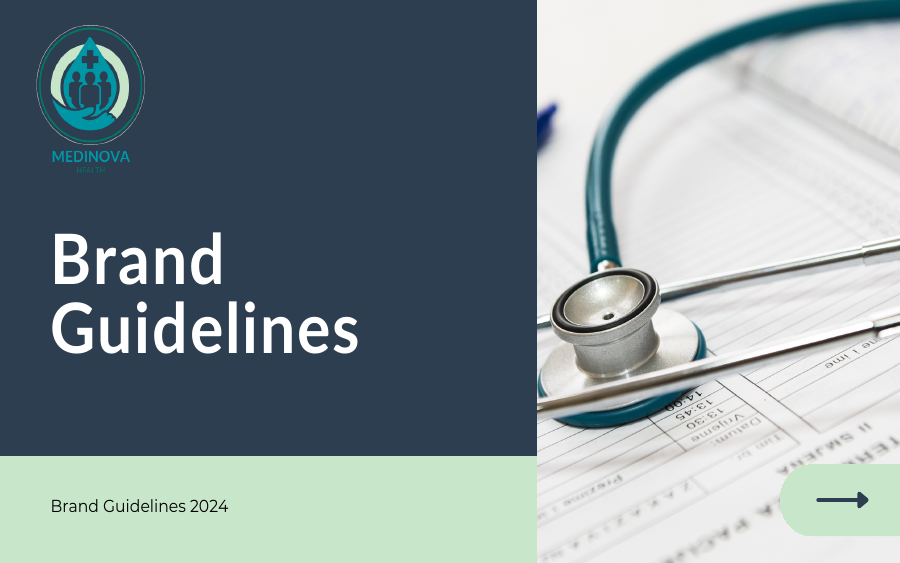
Brand & Style Guide
Colors, typography, and layout rules the finished course had to follow.
Results
Reflection
The variables lesson is a good example of why this structure works: teaching "how variables work" in isolation is forgettable, but asking a learner to capture a name and watch it appear across their own onboarding course makes the feature concrete and worth remembering. It's the same principle behind everything else on this site: design for transfer, not just delivery.